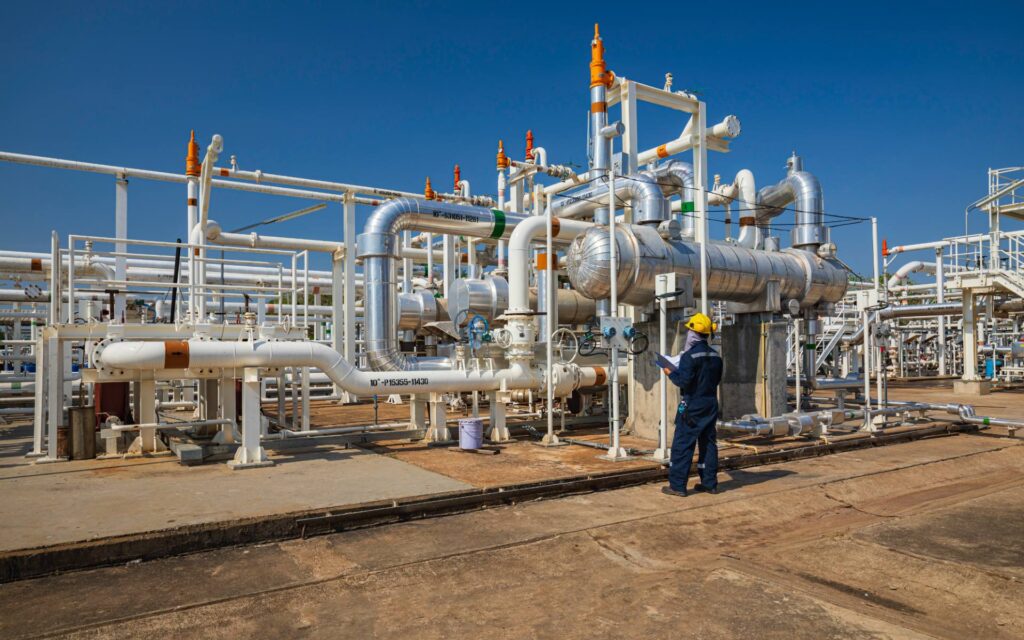
Libya is preparing to award new oil and gas exploration and development licences for the first time in more than 17 years, a move expected to attract several hundred million dollars in foreign investment and lift crude production in the Opec member state.
The licensing round, due to be finalised by the end of February next year, covers 22 blocks 11 offshore and 11 onshore and has already drawn strong interest from major international energy companies including BP, Chevron, ExxonMobil, TotalEnergies, Eni, Shell and OMV.
More than 30 companies have qualified to compete, signalling renewed confidence in Libya’s hydrocarbon sector after years of political turmoil and underinvestment following the 2011 uprising that toppled longtime ruler Muammar Qaddafi.
“This is a major reopening of Libya’s upstream sector,” said Martijn Murphy, principal analyst for North Africa upstream at Wood Mackenzie. “It’s reasonable to expect several hundred millions to be committed in the round, higher if companies bid up offshore blocks.”
“The real swing factor is the offshore Sirte,” he added. “Deepwater wells there can top $100 million each, so any competitive bidding will dramatically lift the total.”
More Read

Libya, which holds Africa’s largest proven oil reserves, is seeking to raise production to two million barrels per day (bpd) by 2030, from about 1.4 million bpd currently. Oil and gas account for around 95 percent of the country’s exports and government revenue, making the sector central to its economic recovery.
The expansion drive comes as Libya’s economy rebounds strongly, with real GDP growth estimated at 13.3 percent in 2025, buoyed largely by rising hydrocarbon output.
“The new bidding round makes Libya an attractive prospect for investors seeking high-reward opportunities,” said Fiza Jan, senior analyst at Rystad Energy. “Collectively, these blocks offer an estimated 10 billion barrels of oil equivalent resources, along with an additional 18 billion barrels of potential.”
More Read

To lure investors, Libya has revised its production-sharing agreements, sharply improving contractors’ returns. Under the updated framework, potential internal rates of return rise to nearly 36 percent, from as low as 2.5 percent previously.
“With huge reserves, low lifting costs, and plenty of easy opportunities, Libya offers prospects not just for global oil majors and large independents, but also for small and medium-sized companies,” said Thomas Strouse, an American energy consultant advising on upstream projects in Libya and the wider Middle East and North Africa region.
Despite the renewed optimism, security risks remain a key concern. Libya is still split between two rival administrations the UN-backed government in Tripoli led by Prime Minister Abdul Hamid Dbeibah and an eastern authority aligned with military strongman Khalifa Haftar and oil infrastructure has repeatedly been targeted during political standoffs.
Last year, the National Oil Corporation (NOC) declared force majeure at the giant Al Sharara oilfield, temporarily halting production amid unrest.
“Risk is always present in Libya and cannot be ignored,” Jan said. “While production has been stable for some time, any sudden incident could disrupt output, potentially dropping it to 500,000 bpd within days.”
Libya’s output plunged to similar levels in 2020 after repeated shutdowns of oilfields and export terminals. Production has stabilised in recent months as tensions have eased, aided by cooperation between rival factions and leadership changes at key institutions.
More Read

The reopening of Libya’s oilfields is also closely watched in Europe, where refiners are seeking alternatives to Russian energy supplies following Moscow’s invasion of Ukraine. Libya’s proximity, low-sulphur crude and direct pipeline link to Italy make it an attractive supplier.
“Libya, as a gateway to Europe, is in an advantageous position to supply oil and gas,” said Bob Fryklund, chief upstream strategist at S&P Global Commodity Insights. “It has more resources than any other country in Africa.”
At the start of 2024, Libya held an estimated 48 billion barrels of proven oil reserves about 41 percent of Africa’s total according to US energy data.
However, rising Libyan output could complicate Opec+ efforts to manage global supply. Libya has long been exempt from production quotas due to instability, but analysts warn that sustained increases could undermine the group’s market-balancing strategy.
“If Libyan output rises towards 1.6 million bpd or higher, then Opec+ will face mounting difficulty in balancing the market,” Jan said.