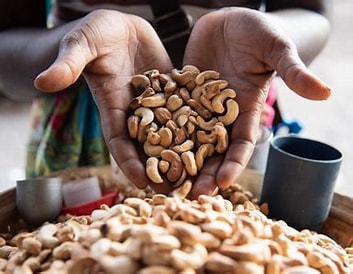
Burkina Faso has commissioned a new US$17.4 million cashew nut processing plant in the western city of Bobo-Dioulasso, stepping up efforts to add value to one of its main agricultural exports and reduce reliance on raw commodity sales.
President Ibrahim Traoré inaugurated the facility, known as Burkina Cajou, on December 20, marking one of the largest recent investments in the country’s agro-processing sector.
The project represents an investment of CFA9.74 billion (US$17.4 million). While led by private investors, about a quarter of the funding came from public and development-linked institutions, including the Burkina Faso Council of Agropastoral and Fisheries Value Chains (CBF), the Dumu Ka Fa Fund, the Fund for the Development of Economic and Social Enterprises (FBDES), and the Commercial Bank of Burkina Faso.
Authorities say the plant is part of a broader strategy to retain more value locally from agricultural production and create jobs. With an installed capacity of 150,000 tonnes per year, the factory significantly expands Burkina Faso’s domestic cashew processing potential.
“This investment reflects our ambition to transform what we produce here, rather than exporting raw materials without added value,” a government official said at the inauguration ceremony.
More Read

The Bobo-Dioulasso facility follows another cashew-related project launched earlier this year. In May, President Traoré broke ground on a CFA6.65 billion (US$11.5 million) cashew apple processing plant in Péni, also in the Hauts-Bassins region. That project, promoted by the CBF, is expected to process 5,000 tonnes of cashew apples annually into juice, wine, vinegar, and alcohol.
Together, the projects highlight Burkina Faso’s push to develop a more integrated cashew value chain. The country is among West Africa’s significant producers of raw cashew nuts, but local processing has lagged behind output.
Industry data underline the challenge. In 2024, agribusiness advisory firm N’kalô estimated that Burkina Faso processed only about 16,000 tonnes of cashew nuts, roughly 10 percent of national production, despite installed processing capacity of around 30,000 tonnes since 2021. Many factories operate below capacity or shut down intermittently due to shortages of raw nuts.
More Read

Export incentives have contributed to the problem. Selling unprocessed cashew nuts abroad remains more profitable for traders, limiting supplies for domestic processors. According to Trade Map data, Burkina Faso exported about US$111.5 million worth of cashew nuts and related products in 2024, with processed kernels accounting for just 11 percent of export revenues.
To address this imbalance, the government suspended exports of raw cashew nuts in March 2025 to prioritise local supply. The ban was lifted on May 20 after authorities said domestic factories had been sufficiently stocked, while warning that restrictions could be reintroduced if shortages re-emerge.
Analysts say the success of Burkina Faso’s processing strategy will depend on whether authorities can strike a balance between supporting local industry and preserving export earnings, especially as new plants increase demand for raw cashew nuts.
For now, the inauguration of Burkina Cajou signals a renewed push by Ouagadougou to move up the agricultural value chain and strengthen agro-industrial development.