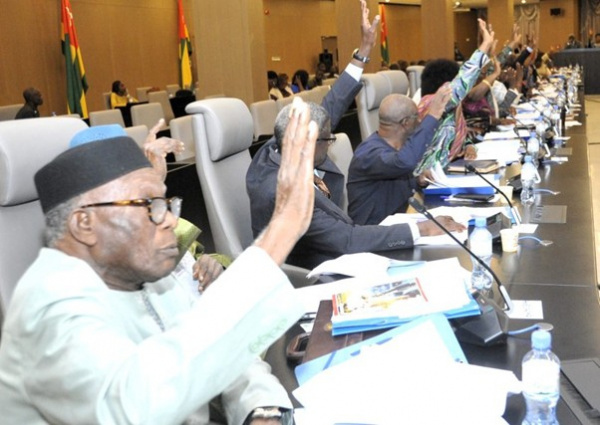
Algeria’s parliament has unanimously passed a landmark law declaring France’s 132-year colonisation of the country a crime, formally demanding reparations, the return of looted artefacts and an official apology from Paris.
The legislation, adopted late Thursday, marks one of Algiers’ strongest legal and political moves yet to force a reckoning with its former colonial ruler. Lawmakers celebrated the vote draped in national colours, chanting “long live Algeria” inside the chamber.

The new law holds France “legally responsible for the tragedies it caused” during its rule from 1830 to 1962 and asserts that “full and fair compensation is an inalienable right of the Algerian state and people.” It also criminalises the glorification of French colonialism, which lawmakers say whitewashes mass violence and systemic repression.
France’s occupation culminated in a brutal war of independence between 1954 and 1962 that left at least 1.5 million Algerians dead, according to Algerian estimates. Historians have documented widespread use of torture, forced displacement and the relegation of Muslim Algerians to second-class status under colonial rule.
While French President Emmanuel Macron has previously described the colonisation of Algeria as a “crime against humanity”, he has stopped short of issuing a formal apology or endorsing reparations — a stance that has long frustrated Algerian authorities.

The issue remains deeply divisive in France, where far-right parties, including Marine Le Pen’s National Rally (RN), have consistently opposed recognition of colonial abuses. Party figures have defended aspects of colonial rule and criticised initiatives aimed at reconciling memories of the past.
Le Pen’s father, Jean-Marie Le Pen, fought in the Battle of Algiers and was later implicated in torture allegations, a symbol of how the colonial war continues to cast a long shadow over French politics.
The Algerian law also reinforces demands for the restitution of cultural and historical property taken during the colonial era. Among the most prominent claims is the return of the 16th-century bronze cannon Baba Merzoug, seized by French forces in 1830 and currently held in the French port city of Brest.

France has taken limited steps in recent years, including the repatriation of the decapitated heads of 24 Algerian resistance fighters. The remains, taken to France as trophies in the 19th century and stored in a Paris museum, were returned to Algeria in a highly symbolic gesture.
Algiers argues such measures fall far short of what justice requires. Last month, Algeria hosted a conference of African states to coordinate pressure on former colonial powers to pay reparations and return looted artefacts.
Foreign Minister Ahmed Attaf said legal action would ensure restitution is “neither a gift nor a favour”, but a right grounded in international law and historical responsibility.
For historian Benjamin Stora, one of France’s leading specialists on the Algerian war, the law reflects a deeper crisis of memory between the two countries.
“In France at the moment there is an obsession with Algeria, with a kind of daily repetition of grievances,” Stora told Middle East Eye earlier this year. He said the debate is fuelled by political leaders and media close to the far right, summoning what he described as a “colonial unconscious”.
According to Stora, both former colonisers and the colonised have internalised power relations from the colonial era, “as if Algeria were still a French colony and should submit to the dictates of Paris”.

Former Algerian diplomat and culture minister Abdelaziz Rahabi echoed that view, saying some in France behave as though “we are back to the time of the colonies”.
Tensions have weighed heavily on bilateral relations. In February, Algerian President Abdelmadjid Tebboune denounced the “deleterious climate” between the two countries and urged Macron to “make his voice heard” to help defuse the crisis.
Whether France will respond to the new law remains unclear. But the vote signals Algeria’s determination to turn historical grievances into legal and diplomatic pressure and to keep the wounds of colonisation firmly on the international agenda.