Malawi is grappling with a deepening housing crisis as rapid urbanisation, policy gaps and high construction costs continue to push decent accommodation beyond the reach of most households, housing experts say.
Analysts warn that successive governments have failed to treat housing as a national priority, despite it being a basic human need, leaving cities struggling to cope with growing demand and rising rents.
A UN-Habitat State of African Cities Report showed that Malawi’s rural-to-urban migration rate stood at 5.3 percent, and that by 2010 the country needed at least 21,000 new housing units annually to meet demand by 2020. That target was never achieved, creating a widening gap between supply and demand that has persisted for more than a decade.
Fifteen years later, the shortage has become acute, with experts saying the lack of sustained investment and coherent housing policy has driven up rental prices and forced many urban residents into informal settlements.
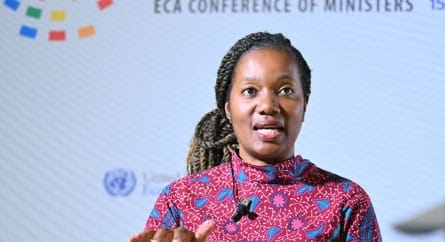
Grace Khumaro, a housing expert at the Malawi University of Business and Applied Sciences (Mubas), said housing has long been treated as a secondary issue within government structures.
More Read

“Housing is not prioritised, yet it is one of the basic needs. There is no stand-alone ministry for housing; it is just a department under the Ministry of Lands and does not receive adequate financial resources,” Khumaro said.
She added that limited access to mortgage financing, combined with high land prices and the rising cost of construction materials, has made home ownership unattainable for most Malawians.
“With expensive urban land and high construction costs, many people simply cannot afford to build their own houses,” she said.
More Read

Khumaro also criticised reliance on the state-owned Malawi Housing Corporation (MHC) to meet national housing needs, calling it unrealistic.
“Since its establishment in 1964, MHC has built no more than 20,000 housing units. Expecting it alone to satisfy national demand was a far-reaching assumption,” she said.
Poor land management has further compounded the problem, according to experts. Large tracts of urban land are often allocated to a few individuals, leaving many serviced plots underdeveloped while housing demand continues to rise.
As a result, residents are being pushed out of cities such as Lilongwe and Blantyre and into surrounding areas originally reserved for agriculture, including Airwing, Mpemba, Chileka and Lunzu.
“These areas were meant to support urban populations through agriculture, but people are now settling there because they cannot access land within planned urban spaces,” Khumaro said, calling for a national reassessment of urban planning and housing policy.
Real estate expert Joseph Ngongole echoed those concerns, citing serious gaps in land distribution and housing planning.

“Authorities tend to allocate land to individuals instead of investors who can deliver large-scale housing projects. There is also no clear guidance on what type of housing should be developed on allocated land,” he said.
Ngongole said better planning — including designated housing types for different income groups — alongside subsidies and incentives for developers could help ease the crisis. He also proposed a government-led housing vehicle to build homes for civil servants.
Another property analyst, Prince Matchika of Real Estate Talk Malawi, said Malawi has never adopted a deliberate, long-term approach to housing.
“The private sector does not see sufficient returns because construction costs are high, making affordable housing difficult to deliver,” he said, urging reforms to attract private investment and improve access to housing finance.
Efforts to obtain comment from the Ministry of Lands, Housing and Urban Development and the Malawi Housing Corporation were unsuccessful.
Experts warn that without decisive reforms, Malawi’s housing crisis will continue to worsen, driving more people into informal settlements and further straining already overstretched urban infrastructure.