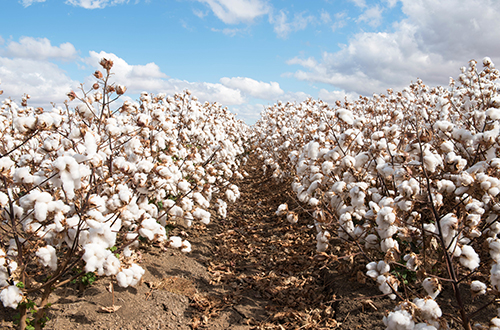
Guinea is stepping up efforts to revive its long-declining cotton sector as the government seeks to restore production, attract investment and reposition the crop as a source of rural employment and export revenue, officials and industry sources say.
After nearly two decades of falling output, authorities have launched a series of measures aimed at relaunching cotton production through state support, institutional reform and partnerships with foreign technology providers.
On December 18, 2025, the Ministry of Agriculture handed over 50 power tillers and 2,000 tonnes of agricultural inputs, including fertilisers and crop protection products, to the Kankan Cotton Company (SCK), the country’s main cotton operator. Officials said the support was intended to strengthen the company’s operational capacity ahead of the 2025/2026 cotton season.
The government hopes the equipment and inputs will help SCK scale up production after years of stagnation. “This support is designed to give the company the means to relaunch cotton cultivation and accompany producers in the field,” the ministry said at the handover ceremony.
SCK Chief Executive Officer Moussa Doumbouya said the company plans to finance at least 5,000 hectares of cotton during the 2025/2026 season, compared with an average of 1,000 to 2,000 hectares cultivated in recent years. In the medium term, the company aims to double planted areas annually to reach significantly higher production levels within five to six years, according to comments reported by local media outlet Mediaguinée.
More Read

The initiative is part of a broader push by Guinean authorities to rebuild the cotton value chain, which once played a central role in the country’s agricultural economy. Cotton production in Guinea is closely tied to the performance of SCK, formerly known as the Guinea Cotton Company, which was created in 1982 by a French partner to structure the sector across around ten prefectures.
At its peak in the late 1990s, Guinea’s cotton output was estimated at nearly 100,000 tonnes per year, making it one of the country’s main cash crops and a major source of income for rural households. The sector supported thousands of direct and indirect jobs and contributed to export earnings.
However, official data show that the withdrawal of the French partner marked the beginning of a prolonged decline. Production fell sharply, first to around 40,000 tonnes and then to just 2,000 to 3,000 tonnes per year in recent seasons. Aging equipment, weak investment, limited processing capacity and management challenges have left the company operating at a fraction of its former scale, authorities say.
More Read

In a bid to reverse the trend, the government has also turned to international partnerships to modernise production. In April 2025, the Ministry of Agriculture signed a cooperation agreement with Israeli irrigation specialist Netafim, focusing on skills transfer and the introduction of modern farming techniques.
Under the agreement, Netafim is expected to support hydro-agricultural development projects and train farmers in precision irrigation and good agricultural practices, particularly for cotton cultivation. The company said improved irrigation and mechanisation could significantly boost yields and productivity.
“We want to apply our global know-how in drip irrigation and good agricultural practices, notably for cotton cultivation,” Netafim’s representative in Conakry, Frédéric Dollon, said at the time, adding that the techniques could raise yields to as much as six tonnes per hectare under optimal conditions.
The government has also taken steps to stabilise SCK’s finances. In December 2025, the Ministry of Agriculture announced that 30% of the company’s share capital had been paid up, allowing SCK to clear salary arrears and prepare operationally for the upcoming cotton season.
Officials say the revival strategy rests on three pillars: rehabilitation of industrial capacity, direct support to producers through inputs and equipment, and technological partnerships to improve yields and efficiency. Cotton has been identified as a priority sector under Guinea’s Simandou 2040 programme, the government’s long-term economic transformation plan covering the period from 2025 to 2040.
Guinea has significant untapped potential, with cotton grown across five administrative regions and more than one million hectares of cultivable land considered suitable for the crop. Much of that land remains underutilised.

Despite these efforts, Guinea remains a minor player in African cotton production, well behind regional leaders such as Benin, Mali, Côte d’Ivoire and Burkina Faso. Whether the current reforms can restore the sector’s former prominence will depend on sustained investment, effective management and the successful mobilisation of farmers over the coming years.