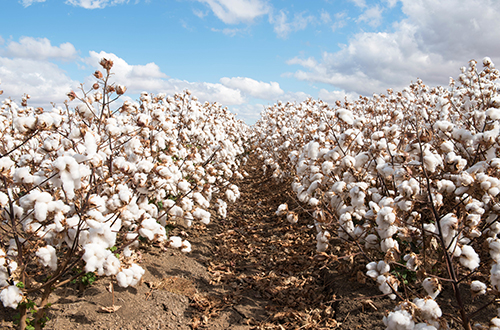
Togo plans to spend US$8.8 million in 2026 to supply fertilizers to cotton farmers, a 15 percent increase over the previous year, the Ministry of Finance and Budget said in its annual Citizen’s Budget.
The government aims to purchase 21,000 tonnes of fertilizer to boost cotton production across the country, with the Plateaux region receiving the largest share of 7,600 tonnes, representing more than a third of the total allocation. The Kara and Savannah regions are expected to receive 6,500 tonnes and 5,000 tonnes, respectively, while the Maritime and Central regions are slated to get 1,000 tonnes and 900 tonnes.

The allocation reflects the production weight of each region, with Plateaux historically contributing the largest share to national cotton output. Authorities said the move is intended to support the national production target of 92,500 tonnes of seed cotton for the 2025-2026 campaign.
“Togo’s commitment to increasing fertilizer supply underlines the government’s focus on strengthening the cotton sector and improving yields,” a ministry official said. “This effort is part of broader measures to ensure the sector reaches its full potential and supports rural livelihoods.”
Since the Singaporean group Olam took over Togo’s cotton sector in 2020, national cotton production has consistently fallen below 60,000 tonnes. However, slight gains have been observed in recent seasons, with production rising to 67,000 tonnes in 2023-2024 before reaching 60,403 tonnes in 2024-2025, data from the New Cotton Company of Togo (NSCT) show.
More Read

The 2026 fertilizer allocation is expected to enhance yields and narrow the gap between actual production and government targets. Analysts say improved access to inputs such as fertilizer is key to reviving Togo’s cotton sector, which remains an important source of income for smallholder farmers and a pillar of the country’s agricultural exports.
“The planned distribution of fertilizers is carefully calibrated to reflect each region’s production potential,” the ministry noted, emphasizing that the policy is both a support mechanism for farmers and a strategic investment in national agricultural output.
The government said it would closely monitor fertilizer distribution to ensure that resources reach intended recipients and are used effectively to boost production. Officials also plan to complement input support with technical assistance programs, training for farmers, and enhanced access to credit, which together are expected to strengthen resilience and competitiveness in the sector.
More Read

Experts note that Togo’s cotton ambitions also have broader economic implications. The sector supports thousands of households, generates export revenue, and underpins local textile processing industries. By investing in fertilizer and improving productivity, the government hopes to secure higher output, increase farmers’ incomes, and position the country to meet both domestic and international demand.
With the 2025-2026 season underway, authorities remain optimistic that the targeted supply of 21,000 tonnes of fertilizer will contribute to a meaningful rise in seed cotton production, building on recent improvements and laying the groundwork for sustained growth in Togo’s cotton sector.