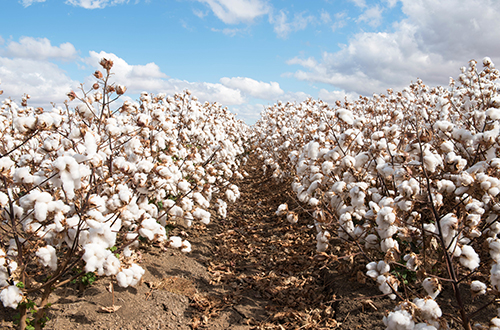
Togo’s cotton sector is rebounding strongly, with output for the 2025–2026 season expected to approach multi-year highs following improved yields and renewed farmer participation, industry officials said.
Data from the New Cotton Company of Togo show seed cotton production is projected at 74,000 tonnes, up 23% from 60,000 tonnes in the previous campaign.
Average yields rose sharply to 995 kg per hectare, compared with 797 kg a year earlier, bringing the sector close to the symbolic one-ton-per-hectare threshold.
“This is very significant for us,” said Martin Drevon, noting that yields were barely 600 kg per hectare five years ago.
The recovery marks a turning point after several years of decline triggered by lower farmgate prices, input shortages and pest infestations.
More Read

Togo’s cotton output fell steadily after Olam Agri acquired a 51% stake in the NSCT in 2020, dropping from 116,000 tonnes that year to a low of about 46,500 tonnes in 2022–2023.
Officials attributed the downturn to multiple shocks, including supply chain disruptions linked to the COVID-19 pandemic, rising fertilizer costs following the Russia-Ukraine conflict, and pest outbreaks that reduced yields by as much as 50% in some areas.
More recently, improved pest control measures, better coordination with farmers and supportive pricing policies have driven the recovery.

Authorities said targeted treatments against pests such as jassids and lepidoptera, combined with stronger technical support for farmers, helped boost productivity across most regions.
More than 68,000 producers cultivated cotton over 74,000 hectares during the current campaign, with some achieving yields as high as 2.5 tonnes per hectare.
The sector has also benefited from stable producer prices, maintained at 300 CFA francs per kilogram for three consecutive seasons, alongside government subsidies to cap fertilizer costs.
Under the subsidy scheme, farmers pay about 14,000 CFA francs per bag of NPK fertilizer, compared with market prices of over 20,000 CFA francs.
Improved dialogue between the NSCT and the National Federation of Cotton Producers’ Groups has further supported the turnaround, following earlier tensions over pricing and transparency.
Looking ahead, authorities are targeting a significant expansion of cotton cultivation, with plans to reach 150,000 hectares and 150,000 tonnes of output by 2030.
More Read

Early indications suggest growing farmer interest, with around 100,000 hectares already declared for the next planting season, even before the current harvest is fully completed.
Despite the positive momentum, challenges remain.
The NSCT’s logistics capacity is under strain, with daily collection volumes stretching transport and processing systems. New trucks ordered from China are not expected to arrive until after the current campaign ends.
Sector officials also highlighted ongoing risks linked to weather variability and global market volatility.
Rainfall fluctuations continue to affect planting and harvesting cycles, while export demand remains concentrated in Asian markets such as Pakistan, India and Vietnam.
Efforts are underway to strengthen resilience through earlier planting, improved agronomic practices and research into regenerative agriculture.
At the same time, the development of local textile processing capacity at the Adetikope Industrial Platform could help reduce reliance on exports over the longer term, although these initiatives are still at an early stage.
For now, the sector’s rebound is being seen as a sign of renewed stability after years of disruption, with officials cautiously optimistic about sustaining growth if current reforms are maintained.