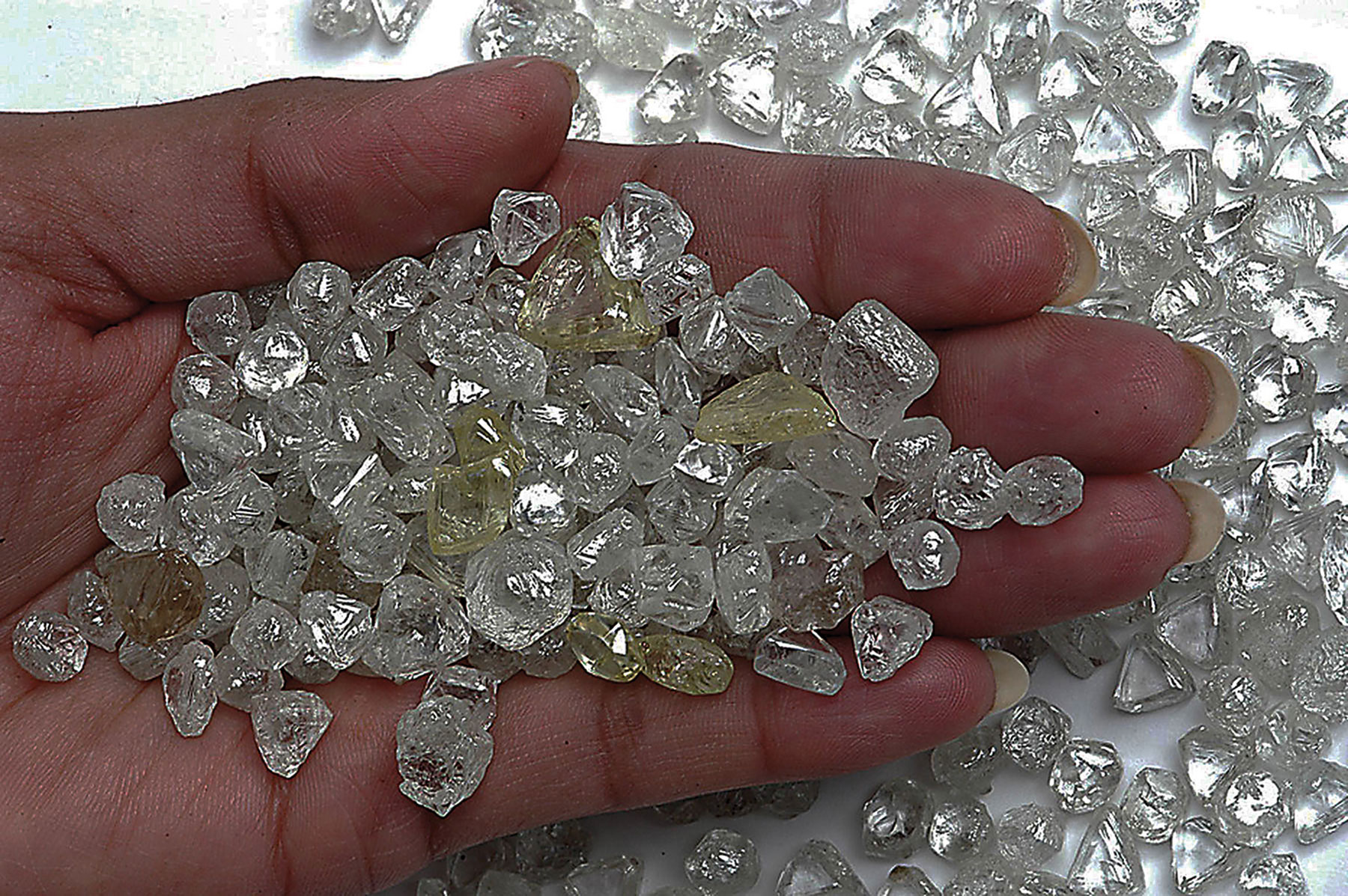
Botswana is accelerating efforts to diversify its mining sector, forging new partnerships with Gulf states and European investors as a prolonged downturn in diamonds exposes vulnerabilities in its economy.
During a visit to Oman this week, President Duma Boko announced a joint exploration agreement between the Botswana Geo-Science Institute and Minerals Development Oman. The deal follows a separate trip to France, where mining investment featured prominently in discussions, underscoring a broader strategy to attract foreign capital.
The push reflects growing urgency. Diamonds account for roughly 70 percent of Botswana’s exports, about one-third of government revenue, and a quarter of gross domestic product. However, the sector has been under sustained pressure for more than three years, weighed down by declining prices for natural stones and intensifying competition from lab-grown diamonds.

Debswana—a joint venture between the government and De Beers—has cut production by about 40% between 2023 and 2025. The slowdown has contributed to a rare double recession, with the economy contracting by 2.8% in 2024 and a further 0.4% in 2025.
New partnerships and untapped resources

Since taking office in October 2024, President Boko has stepped up engagement with international investors. In Paris, he urged French firms to explore opportunities in Botswana’s mining sector. Nuclear fuel company Orano has already secured uranium exploration permits, aligning with Europe’s efforts to diversify supply chains after disruptions in Niger.
In the Gulf, Botswana has also strengthened ties with Qatar. In August 2025, Al Mansour Holdings, led by Sheikh Al Mansour Bin Jabor Bin Jassim Al Thani, signed a $12 billion investment agreement spanning multiple sectors, including mining.

These partnerships are supported by significant untapped mineral potential. Botswana is estimated to hold around 800,000 tonnes of uranium reserves. Projects such as Letlhakane, being developed by Lotus Resources, could produce up to 3 million pounds of uranium annually over a decade.
More Read

Authorities estimate that about 70% of the country’s territory remains unexplored, presenting substantial opportunities for discoveries in copper, gold, graphite, and iron ore.
Gradual diversification underway
While diamonds still dominate, Botswana has begun building capacity in other minerals. The country now produces more than 100,000 tonnes of copper annually from two key operations: the Motheo mine, operated by Sandfire Resources, and the Khoemacau mine, run by MMG Limited.
MMG announced a US$700 million investment in 2024 to expand Khoemacau’s output to 130,000 tonnes per year. Meanwhile, BHP has entered Botswana through a $25 million investment in exploration projects led by Cobre Limited.

In manganese, Giyani Metals is advancing the K.Hill project, which could produce up to 80,000 tonnes annually of high-purity manganese sulfate—a key input for electric vehicle batteries.
Economic pressures mount
More Read

Despite these developments, diversification will take time to yield results. Mining projects typically require years of exploration, feasibility studies, and development before reaching production.
Meanwhile, fiscal pressures are intensifying. S&P Global Ratings downgraded Botswana’s sovereign rating to BBB- with a negative outlook in March 2026, citing rising deficits and economic strain. The fiscal deficit is projected to reach 8.9% of GDP in the 2026–2027 period.
The country’s sovereign wealth fund has also declined sharply, falling from 5.4 billion pula (around $400 million) to just 846 million pula between mid-2024 and the end of 2025.
The International Monetary Fund has cautioned against increasing state exposure to the diamond sector, urging authorities to strengthen private sector participation and broaden the export base.
Long road ahead
While new mineral projects offer a pathway to economic diversification, analysts say they will not provide immediate relief.
For Botswana, the challenge lies in managing a difficult economic transition—balancing short-term fiscal pressures with long-term ambitions to reposition itself as a diversified mining hub.
As global demand for critical minerals grows, the country’s ability to attract sustained investment and translate exploration into production will be key to reducing its reliance on diamonds and securing future growth.