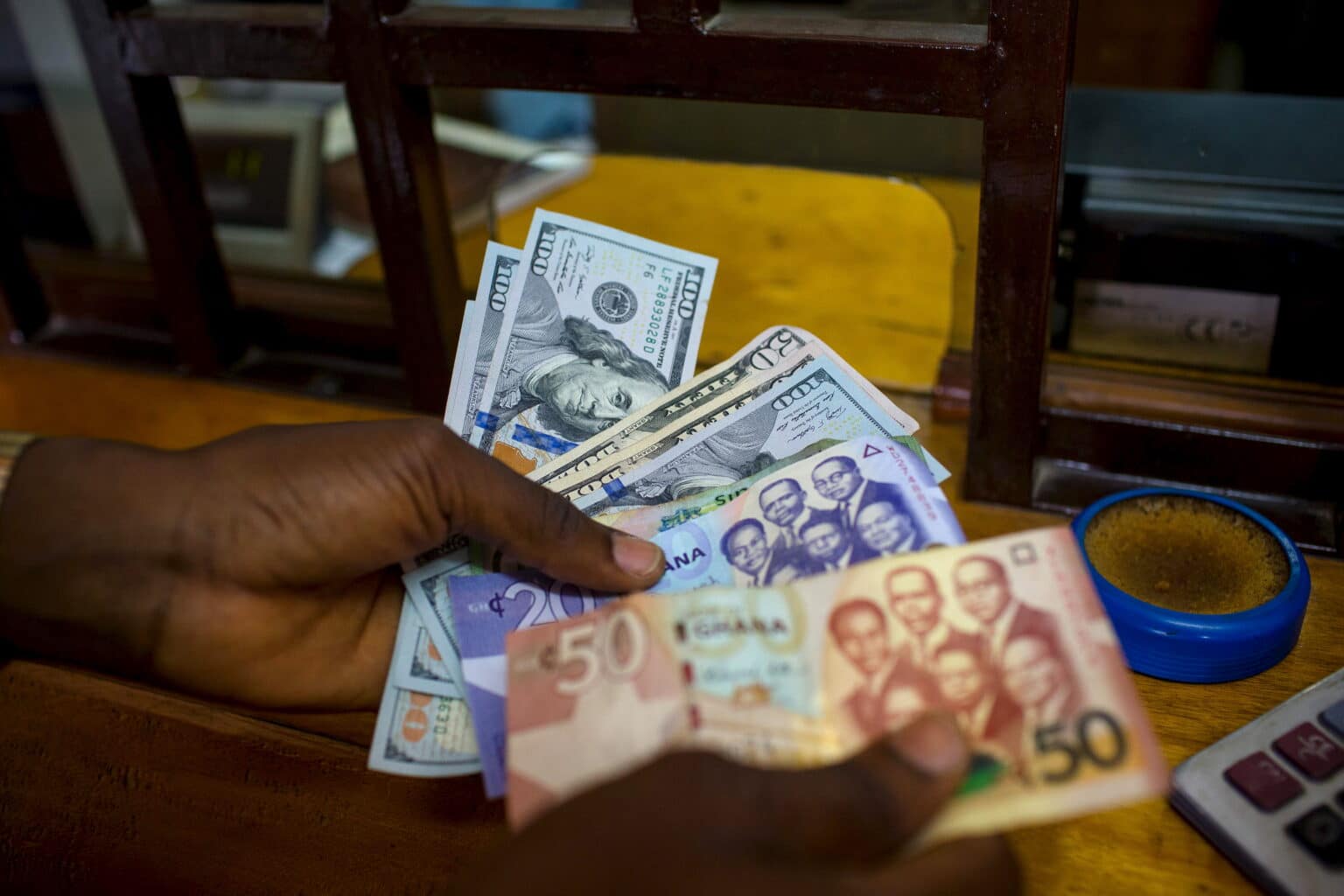
Ghana’s cedi is expected to remain under pressure in the coming days as persistent demand for US dollars from corporates and the energy sector continues to outstrip foreign currency inflows, traders said Thursday.
The outlook contrasts with expectations of relative stability across several other African currencies, including those of Kenya, Nigeria and Uganda, while Zambia’s kwacha is seen with potential for modest gains on improved foreign exchange inflows, particularly from the mining sector.
Ghana’s cedi has come under renewed pressure in recent weeks, with traders pointing to sustained corporate demand for foreign exchange, especially from energy importers, alongside limited supply from export earnings and central bank interventions.
LSEG data showed the cedi trading at about 11.34 to the dollar, compared with 11.26 a week earlier, indicating a gradual weakening trend.
“The cedi is likely to continue its steady slide as FX backlogs persist,” one currency trader said, adding that demand for dollars from corporates has remained strong despite ongoing interventions in the market.
More Read

Another trader said inflows from mining companies and foreign exchange allocations from the central bank had not been sufficient to match demand, leaving the market structurally short of dollars.
Ghana has faced repeated bouts of currency pressure in recent years, driven by import dependence, external debt servicing costs, and periodic tightness in foreign exchange liquidity. Although authorities have implemented a series of stabilisation measures, including FX auctions and monetary policy adjustments, traders say underlying demand pressures remain elevated.
The cedi’s weakness also comes amid broader concerns about foreign exchange backlog settlements, which market participants say continue to distort pricing and limit confidence in the near-term outlook.

In contrast, currencies in East Africa are expected to remain relatively stable.
In Kenya, the shilling is forecast to hold steady in the coming week, supported by a balance between importer demand for dollars and steady inflows from remittances, exports and diaspora transfers.
Commercial banks quoted the Kenyan shilling at 128.95/129.25 to the dollar, compared with 129.05/129.25 a week earlier, reflecting minimal movement.
“We expect it to remain stable,” a Nairobi-based trader said, citing balanced market conditions and consistent inflows.
Kenya’s currency has in recent months benefited from improved external financing flows and central bank oversight, which have helped smooth volatility despite ongoing import demand pressures.
In Nigeria, the naira is also expected to remain broadly stable, supported by foreign exchange interventions from the central bank and stronger dollar inflows linked to crude oil receipts.
More Read

LSEG data showed the naira trading at about 1,368 to the dollar in intraday activity, compared with 1,356 a week earlier. On the parallel market, the currency hovered around 1,400 to the dollar.
“What we’re seeing is the market settling into a balance, driven by the central bank’s interventions and also steady inflows from oil receipts,” one trader said.
Nigeria’s foreign exchange market has undergone significant reforms in recent years aimed at narrowing the gap between official and parallel market rates, though liquidity constraints and external pressures continue to influence sentiment.
In Uganda, the shilling is also projected to remain stable in the near term after the central bank kept its benchmark lending rate unchanged at 9.75% for the seventh consecutive policy meeting.
Commercial banks quoted the Ugandan shilling at 3,735/3,745 to the dollar, slightly stronger than the previous week.
The central bank has indicated that inflation could rise moderately in the second half of the year, partly due to external shocks, but traders say its neutral monetary stance is likely to anchor expectations and limit volatility.
In Zambia, the kwacha has shown signs of appreciation, supported by stronger inflows from the mining sector and foreign institutional investors.
The currency traded at 18.98 to the dollar, compared with 19.19 a week earlier, reflecting improved dollar supply conditions.
Zambia’s export earnings, particularly from copper, remain a key driver of foreign exchange liquidity, with traders noting that sustained inflows could continue to support the currency in the short term.
Across the region, analysts say currency movements remain heavily influenced by commodity exports, monetary policy decisions and external financing conditions.
While most currencies are expected to remain broadly stable in the near term, Ghana stands out as facing continued downward pressure, underscoring persistent structural challenges in its foreign exchange market.