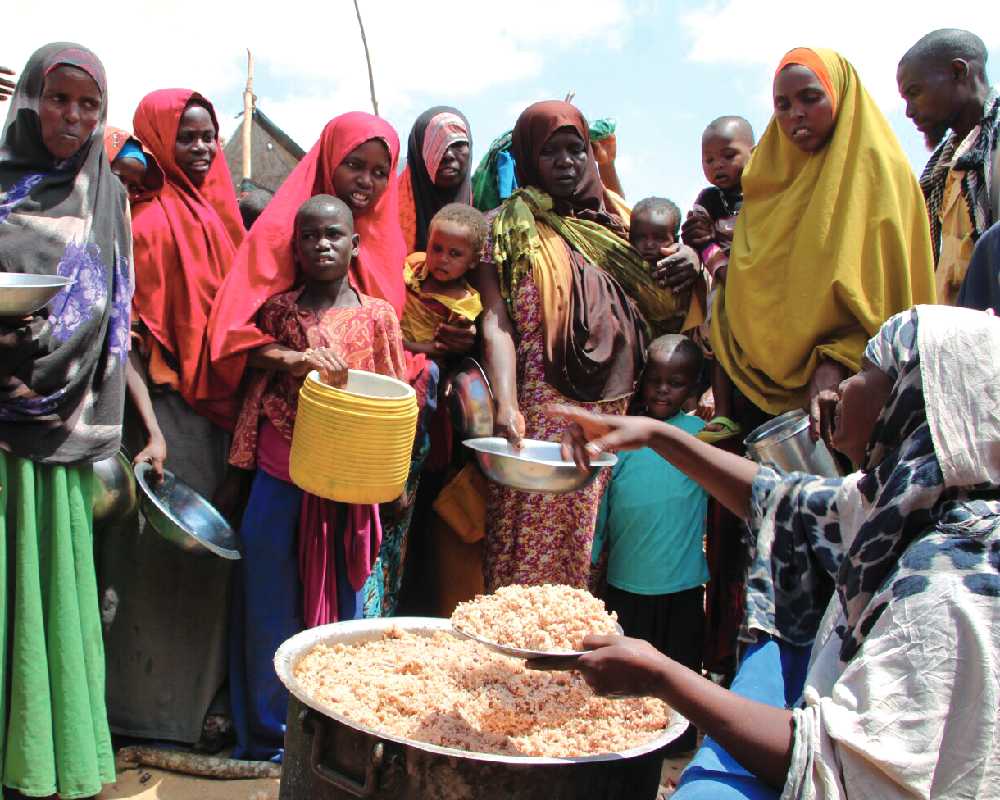
xtrEeme hunger is worsening across 13 global “hunger hotspots,” with Sudan, South Sudan, Yemen, Somalia, northeast Nigeria and Gaza facing an immediate risk of famine without urgent humanitarian intervention, a United Nations report has warned.
The report, jointly published by the Food and Agriculture Organization (FAO) and the World Food Programme (WFP), said food insecurity is expected to deteriorate further in the most vulnerable areas between June and November 2026.
Conflict remains the main driver of hunger in most of the identified hotspots, the agencies said, with violence disrupting food production, markets, livelihoods and humanitarian access.
The report also highlighted the impact of declining humanitarian funding, saying reductions in support for food and agricultural assistance have worsened the situation.
Funding for such programmes fell by about 59 percent between 2022 and 2025, while an estimated 266 million people are currently facing acute food insecurity.
More Read

“The warnings in this report cannot be ignored,” WFP Acting Executive Director Carl Skau said, urging greater international action to prevent further suffering.
FAO Deputy Director-General Beth Bechdol called for early and expanded intervention, warning that delays could allow food crises to escalate into full-scale famine conditions.
The report identified conflict, economic instability, climate shocks and displacement as key factors driving worsening hunger levels.
More Read

In Gaza, the report said food conditions have improved since the October 2025 ceasefire, but the humanitarian situation remains extremely fragile.
About 1.6 million people in Gaza are still facing acute food insecurity, according to the assessment.
In Sudan, where conflict has severely disrupted agriculture and supply chains, famine risks remain in several areas, with the number of people experiencing catastrophic hunger expected to rise in 2026.
The war in Sudan has displaced millions of people and created one of the world’s largest humanitarian crises, limiting access to food, healthcare and essential services.
The report also highlighted growing concerns in Somalia and northeast Nigeria, where years of drought, insecurity and displacement are increasing pressure on vulnerable communities.
In northeast Nigeria, ongoing conflict and displacement have affected farming activities and access to markets, contributing to rising food insecurity.
More Read

The UN agencies warned that without immediate humanitarian assistance and support for agricultural recovery, vulnerable populations could face worsening conditions in the coming months.
The report also pointed to additional disruptions caused by the conflict in the Middle East and an Ebola outbreak in eastern Democratic Republic of Congo, which have affected livelihoods, trade and humanitarian operations.
Humanitarian agencies have repeatedly called for increased funding and improved access to affected communities as crises continue to multiply around the world.
The FAO and WFP said early action, including emergency food assistance, support for farmers and investment in resilient food systems, will be critical to preventing further deterioration.
They warned that the current situation requires urgent global attention, as millions of people remain at risk of severe hunger in some of the world’s most fragile regions.