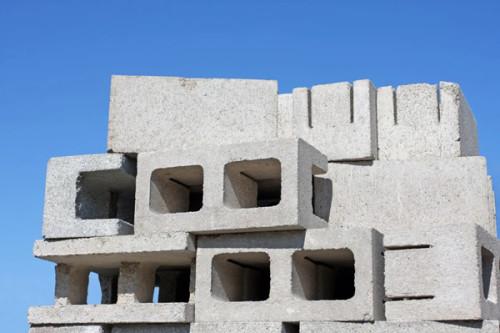
Cameroon plans to construct three brick and tile production plants in the Centre, Littoral, and North regions by the end of 2027 under a zero-interest financing programme worth about US$68 million, officials said Thursday.
The initiative follows a memorandum of understanding signed on January 9, 2026, between the Mission for the Promotion of Local Materials (MIPROMALO) and UAE-based SGC Investment LLC. Authorities expect to finalise the loan agreement by April 2026.

“Each site was selected based on the availability of raw material deposits,” said Likiby Boubakar, Director General of MIPROMALO, in an interview with the national daily Cameroon Tribune. Studies are ongoing to assess the deposits’ exploitability, material characteristics, and spatial extent, as well as the viability of the project and alignment with Cameroon’s National Development Strategy (NDS30).
Site selection also drew on research conducted with the Federation of Marble Industries of Rio de Janeiro. While production will be regionally distributed, the plants are expected to supply construction materials nationwide.
The programme reinforces a March 12, 2007, prime ministerial circular mandating the use of local materials in the construction of public buildings up to the R+1 level. Officials said the new initiative is intended to support low-cost housing and expand access to affordable construction materials.
More Read

The US$68 million financing programme carries a zero-percent interest rate. A technical working group has been established to finalise the loan agreement, with construction and installation of equipment scheduled for completion by the end of 2027, after which the plants will begin operations.
Expanding Cameroon’s local materials sector
MIPROMALO currently operates regional centres and branches in seven of the country’s ten regions, including Bamenda, Dibombari, Ekondo-Titi, Garoua, Maroua, Ngaoundere, and Yaoundé, with additional centres planned for the East, West, and South regions by early 2027.

Authorities say demand for local construction materials has been rising due to their economic and environmental advantages. Projects built using local materials include classrooms across all ten regions, demonstration housing units, city halls, municipal markets, and food storage facilities. About 100 resettlement houses have also been constructed for populations displaced by the KPDC gas transport project along the Kribi-Edea corridor.
Private clients have increasingly commissioned structures using local materials, including churches, traditional chieftaincies, socio-cultural facilities, and residential housing.
According to Boubakar, the new programme is expected to contribute to the expansion of Cameroon’s local materials sector while supporting construction projects nationwide. Officials said the plants will help reduce reliance on imported materials, cut construction costs, and promote the use of sustainable, locally sourced building inputs.
The programme aligns with Cameroon’s broader goal of strengthening domestic industrial capacity, fostering employment in manufacturing, and supporting infrastructure development. By providing affordable building materials, authorities hope to stimulate growth in housing, public facilities, and private construction projects, while enhancing regional economic development.