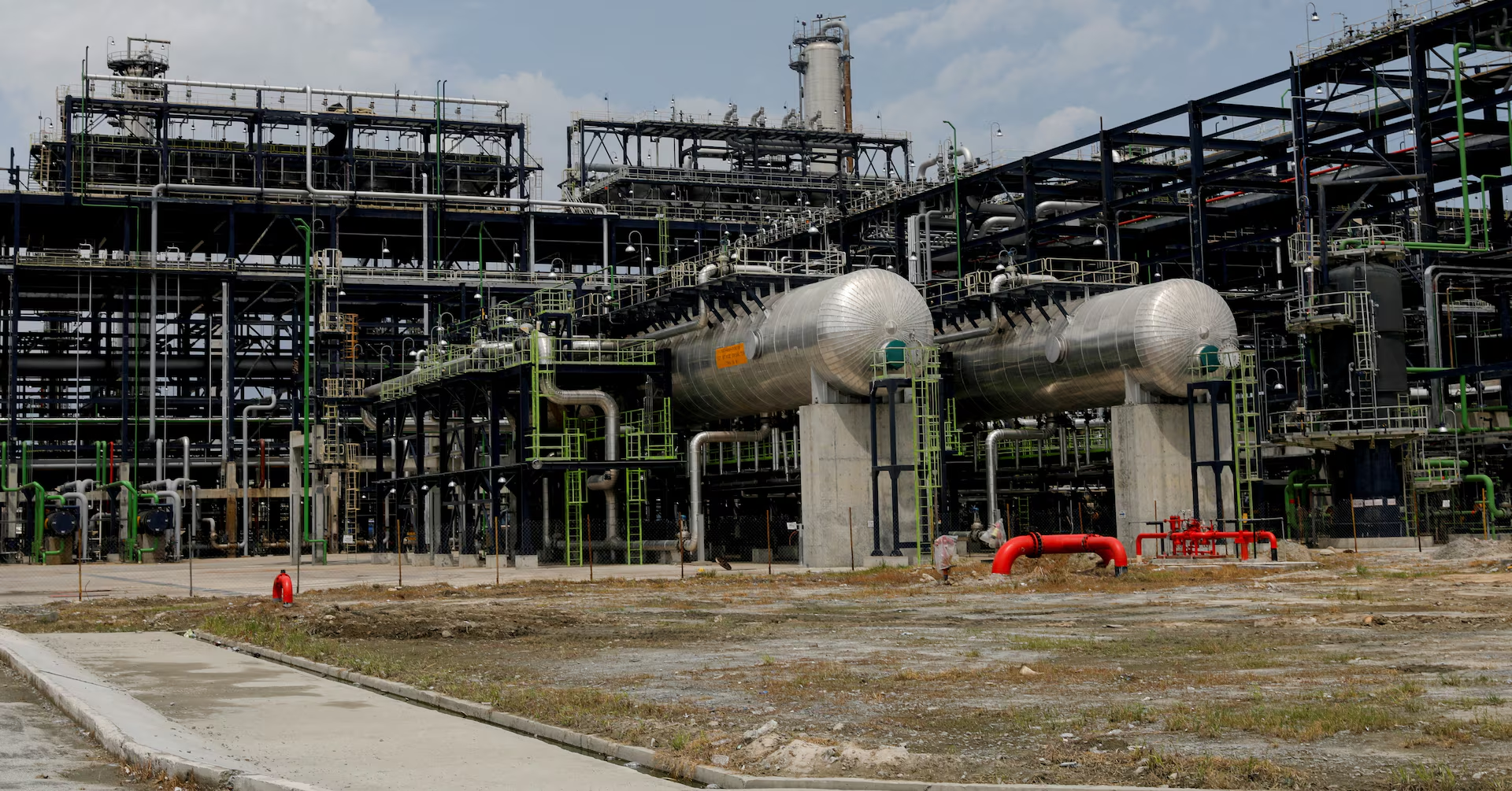
Egypt is moving ahead with six petroleum refinery development projects with total investments exceeding $4 billion, aimed at increasing domestic production, adding value, and reducing the country’s fuel import bill, Minister of Petroleum and Mineral Resources Karim Badawi said.
Badawi made the announcement following a meeting with International Finance Corporation (IFC) Vice President for Africa, Ethiopis Tafara, and Regional Director Cheick-Oumar Sylla to discuss investment and financing opportunities in petroleum refining, petrochemicals, and value-added industries, as well as the mining sector.


The discussions focused on potential cooperation to provide financing to accelerate the utilisation of Egypt’s refining infrastructure. Badawi highlighted reforms over the past 18 months to improve the investment climate, including settling dues to exploration and production partners and introducing incentive packages to boost local production.
In the mining sector, the minister said the government is promoting investment in gold and mineral exploration, as well as facilitating industrial projects based on Egyptian raw materials to increase the sector’s contribution to gross domestic product. He emphasized that project safety, asset integrity, and environmental compliance remain “non-negotiable” in the petroleum sector.
Tafara praised the ministry’s reforms and reaffirmed IFC’s commitment to its partnership with Egypt, noting that the mining sector is a priority for the corporation in Africa, with a focus on maximizing the value of mineral resources. Both sides agreed to hold joint meetings between specialists soon to identify cooperation priorities.
More Read


The meeting was attended by officials including Egyptian General Petroleum Corporation (EGPC) CEO Salah Abdel Karim, EGPC Vice President for Finance and Economic Affairs Amal Tantawy, Ministry Undersecretary for Projects Wael Lotfy, and Mohamed El-Bagoury, supervisor of the ministry’s Central Department of Legal Affairs.
Egypt has been steadily investing in its energy and refining infrastructure to reduce reliance on imported fuels and increase the domestic value of its natural resources. Historically, the country has imported significant quantities of refined petroleum products despite being a major oil and gas producer in the region. This reliance has strained the trade balance and exposed the economy to fluctuations in global oil prices.
To address these challenges, Egypt has embarked on an ambitious programme to modernize and expand its refining capacity. The current six refinery projects, with combined investments exceeding $4 billion, aim to boost domestic production of gasoline, diesel, and other petroleum derivatives while supporting the development of downstream industries such as petrochemicals. Increasing local refining capacity allows the country to capture more value from its oil output and reduce the need for imports, contributing to energy security and industrial growth.
More Read

The projects also align with broader government efforts to attract private and international investment into the oil, gas, and mining sectors. Over the past 18 months, the Ministry of Petroleum and Mineral Resources has implemented reforms designed to improve the investment climate, including settling outstanding dues with exploration and production partners and introducing incentive packages to stimulate local production. Such measures aim to provide predictability and security for investors while accelerating the utilization of existing infrastructure.
Egypt’s mining sector, including gold and industrial minerals, is also targeted for expansion. The government has focused on facilitating partnerships for projects based on domestic raw materials, increasing the sector’s contribution to gross domestic product and promoting local value-added industries. By coupling petroleum refining with mining and industrial projects, Egypt seeks to diversify its economy, reduce dependence on imports, and create sustainable jobs.
International partners such as the International Finance Corporation (IFC) play a key role in supporting these initiatives. IFC financing can provide capital for large-scale infrastructure projects while promoting adherence to global environmental, social, and governance (ESG) standards. Partnerships with institutions like IFC help Egypt attract further private investment and strengthen its integration into regional and global markets.
Safety, asset integrity, and environmental compliance remain central priorities for the country’s energy strategy. Authorities stress that all refinery and mining projects must meet strict operational and environmental standards, reflecting Egypt’s commitment to sustainable industrial growth.
Overall, these investments are part of a broader national strategy to enhance energy security, maximize the value of domestic resources, and support industrial development. By expanding refining capacity, promoting local production, and leveraging international financing, Egypt aims to reduce its fuel import bill, strengthen economic resilience, and accelerate the growth of strategic sectors in the coming decade.