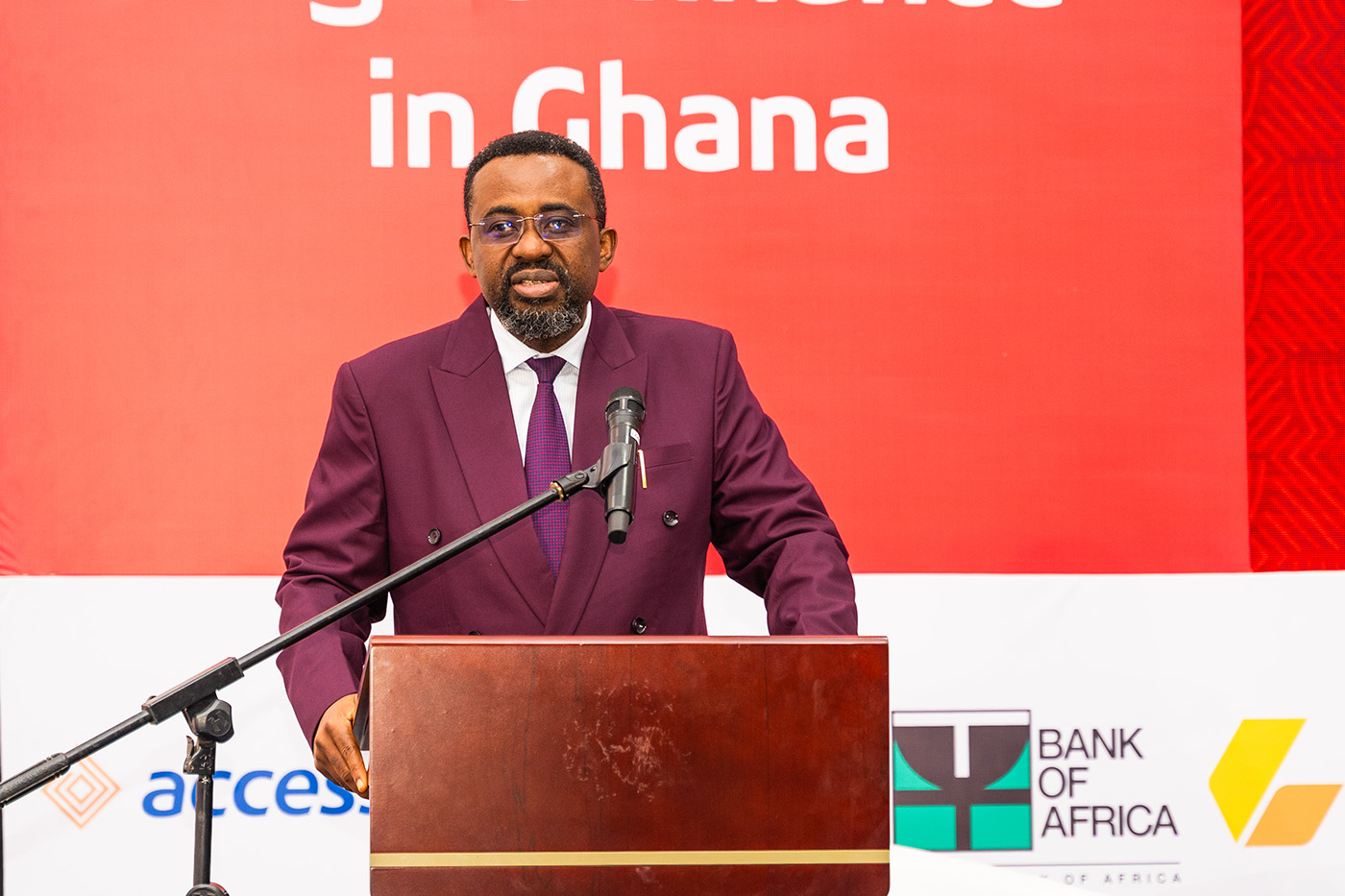
Ghana’s battle to tame inflation and stabilise the cedi came at a steep financial cost to the central bank, Governor Johnson Pandit Asiama said, highlighting the difficult trade-offs monetary authorities face as they try to balance price stability with economic growth.
Speaking at the Kwahu Business Forum on Sunday, Asiama said the sharp decline in inflation in 2025 was achieved only through expensive monetary operations aimed at mopping up excess liquidity from the economy.

“Last year was good but expensive for the central bank,” he told participants during the Governor’s Roundtable session. “It took us a lot of money to mop up excess liquidity and bring inflation down to 5.4 percent by December 2025.”
His comments offered a rare public acknowledgement of the financial strain often placed on central banks when they aggressively tighten monetary conditions to bring prices under control.

Ghana has in recent years battled high inflation, currency volatility and elevated borrowing costs, with the central bank deploying a mix of policy tools to restore stability. According to Asiama, those efforts yielded visible results in 2025, including easing inflation, exchange rate stability and stronger macroeconomic indicators.
More Read

“The cedi is stable and under control,” he said, adding that the broader economic picture had improved considerably.
But the governor stressed that such gains do not come without consequences.
“The work we do is always about trade-offs… trying to strike the right balance,” he said, referring to the challenge central banks face in deciding how much tightening is needed to lower inflation without choking growth or damaging financial conditions.
More Read

At the heart of the cost is the Bank of Ghana’s use of open market operations — a standard monetary policy tool used to absorb excess cash from the financial system. In practice, this often involves issuing short-term instruments such as Bank of Ghana bills, which commercial banks buy in exchange for liquidity.

Those operations can become particularly expensive when interest rates are high, because the central bank must pay more to sterilise money in circulation.
That has direct implications for the institution’s balance sheet.
Central banks are unlike commercial lenders because their core mandate is not to maximise profit but to preserve economic stability. That means they are often required to absorb significant costs in pursuit of lower inflation, even if doing so weakens their own financial position in the short term.
Analysts say Ghana’s recent disinflation path illustrates that reality.
Inflation fell from 23.8% at the end of December 2024 to 5.4% by December 2025 — a drop of 18.4 percentage points in a year. Such a rapid slowdown would almost certainly have required sustained liquidity tightening and elevated sterilisation costs.
More Read

At the Bank of Ghana’s last Monetary Policy Committee briefing, Asiama had already hinted that the cost of open market operations rose significantly in 2025 because of the scale of the liquidity mop-up exercise.

Still, policymakers argue that allowing inflation to remain high would have been even more damaging.
When prices rise sharply, households and businesses lose purchasing power, investment planning becomes harder and the real value of incomes declines. For consumers, especially those on fixed wages, inflation effectively reduces what they can afford to buy even if nominal incomes do not change.
That is why central banks are often willing to bear short-term financial pain in order to avoid broader economic harm.
Asiama suggested that the burden on the central bank should ease in 2026, with inflation now much lower and the need for aggressive intervention reduced.
“If you look at where inflation was at the end of December 2024 and where it is now, it wouldn’t involve the same level of resources to keep it low and stable going forward,” he said.
That means the central bank is likely to spend less this year defending its inflation gains than it did while trying to force prices down from elevated levels.
For businesses, that could be an encouraging sign.
A low and stable inflation environment, combined with a steadier exchange rate, generally improves confidence, reduces uncertainty and supports investment decisions. It can also create better conditions for financial intermediation if banks are operating in a more predictable macroeconomic environment.
Asiama said that was one of the key objectives of the central bank’s efforts.
“When banks are strong, they can give more credit,” he said, underscoring the link between financial sector stability and broader economic expansion.
His remarks come as Ghana seeks to consolidate its recent macroeconomic gains and reassure businesses that the era of extreme volatility may be easing.
While the costs of restoring stability have been significant, the central bank appears confident that the heaviest phase of the fight against inflation is now over.