The International Monetary Fund has offered technical expertise to Gabon’s Economic, Social, Environmental and Cultural Council (CESEC) as the Central African country seeks to strengthen economic governance and institutional capacity.
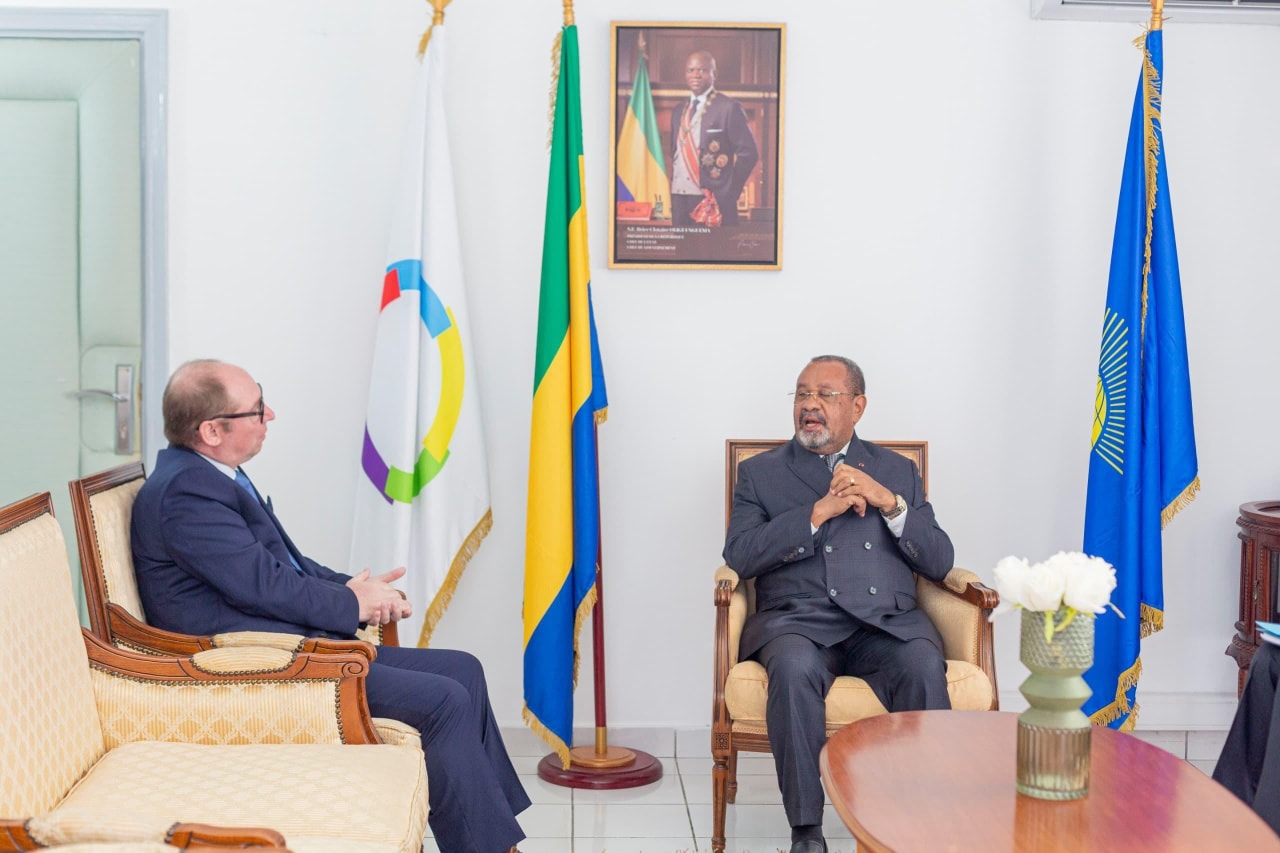
Guy Bertrand Mapangou, president of CESEC, met the IMF’s Africa representative, Alain Gauris, in Libreville on Tuesday to discuss areas of cooperation, including macroeconomic analysis and capacity building, CESEC said in a statement.
The talks come as Gabon’s transitional authorities work to redefine policy priorities and institutions under what they describe as the country’s Fifth Republic, following political changes in recent years.
Gauris said the meeting was primarily a courtesy call to congratulate Mapangou on his recent appointment, but added that it also opened the door to deeper collaboration between the IMF and CESEC.
“We reflected together on how CESEC and the IMF could collaborate in the future,” Gauris told reporters after the meeting, noting that discussions focused on technical cooperation, particularly on macroeconomic issues.
More Read

CESEC is a consultative body that advises the government on economic, social, environmental and cultural matters. While it does not set policy, its recommendations can influence legislation and national development strategies.
Gauris said CESEC’s advisory role made it a natural partner for technical exchanges with the IMF, especially as Gabon reviews its economic framework and long-term development plans.
“The CESEC is an important consultative entity in the construction of the Fifth Republic,” he said. “This gives us an opportunity to reflect together on macroeconomic aspects and possibly to strengthen capacities where CESEC feels the need.”
More Read

The IMF has been closely engaged with Gabon in recent years, providing policy advice and financial support as the country grapples with high public debt, fiscal pressures and the need to diversify its oil-dependent economy.
Although no formal agreement was announced, officials said the meeting laid the groundwork for future collaboration, potentially including training, technical assistance and analytical support in areas such as public finance, economic planning and social policy assessment.
CESEC said the discussions reflected a shared desire to build a “lasting and constructive partnership” in support of Gabon’s development objectives.
Analysts say closer engagement between Gabonese institutions and the IMF could help improve policy coordination and strengthen institutional capacity, particularly as the country seeks to restore investor confidence and accelerate reforms.
The IMF has stressed the importance of sound macroeconomic management and strong institutions across sub-Saharan Africa, amid rising debt levels, tighter global financial conditions and slowing growth in some economies.
For Gabon, officials say external technical support could help align economic policies with social and environmental priorities, as the government balances fiscal discipline with demands for inclusive growth.

No timeline was given for concrete next steps, but both sides indicated that discussions would continue in the coming months.