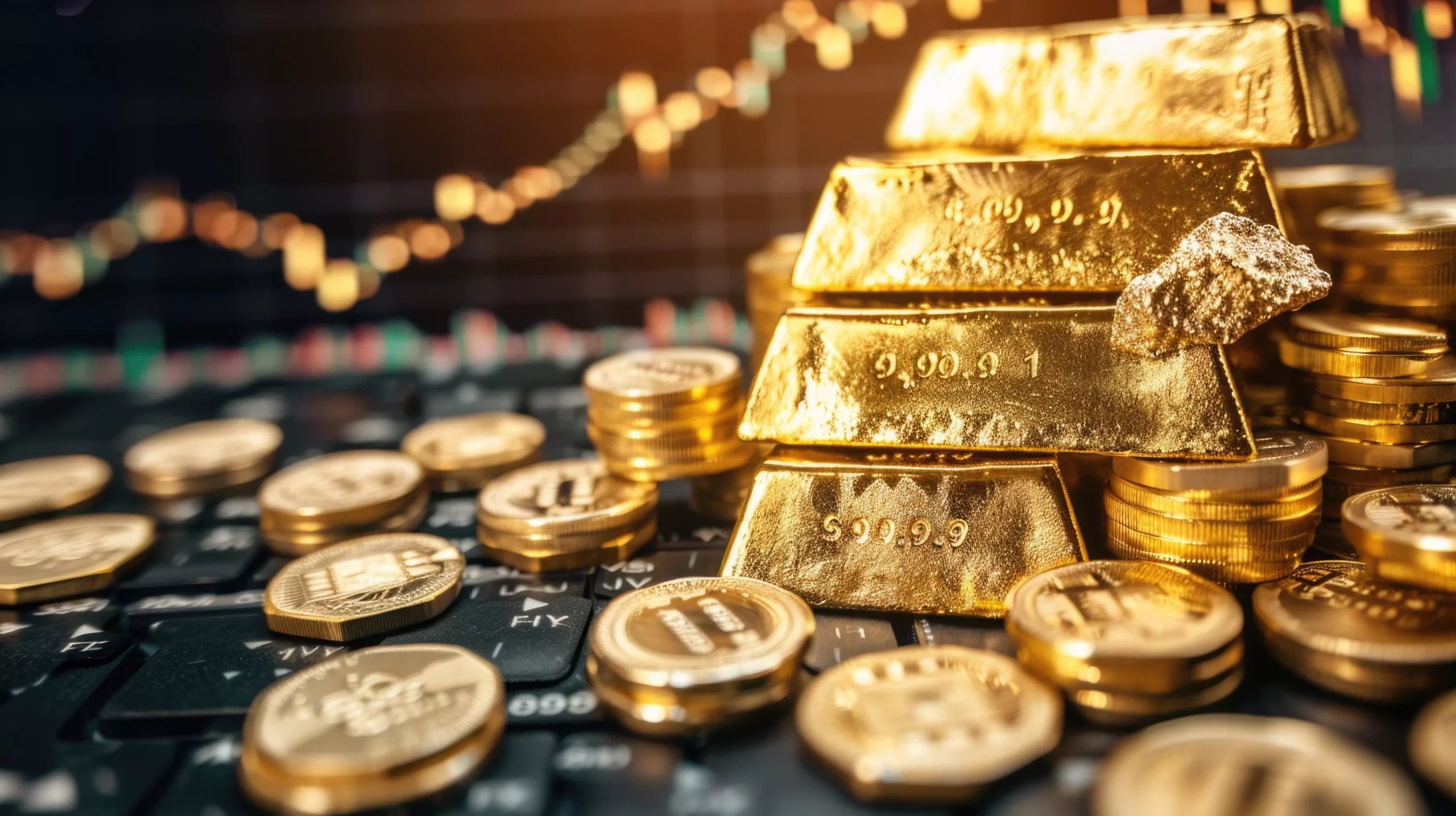
South Africa’s rand strengthened further against the US dollar on Tuesday, buoyed by a surge in gold prices to fresh record highs, underscoring the currency’s strong performance this year.
The rand traded at 16.6875 per dollar by 0745 GMT, about 0.1 percent firmer than Monday’s close and its strongest level since August 2022, according to market data. The gains came as gold, one of South Africa’s most important exports, continued its rally, boosting sentiment toward the resource-rich economy.

Soaring prices of precious metals have been a key driver of the rand’s recent advance, helping propel the currency to its strongest levels in more than three years. South Africa is among the world’s leading producers of gold, platinum group metals and other minerals, making its currency particularly sensitive to movements in commodity markets.
The rand is now on track to end the year up more than 12 percent against the dollar, also supported by signs of improved fiscal discipline and success in containing inflation. Investors have taken comfort from efforts by authorities to stabilise public finances and rein in price pressures after several years marked by power shortages, sluggish growth and rising debt concerns.
Johannesburg-listed shares also edged higher, tracking the positive mood in currency and commodity markets. The Top-40 index on the Johannesburg Stock Exchange was last up around 0.6 percent, extending gains from the previous session.
More Read

Trading volumes, however, were thinner than usual, with many investors away from their desks ahead of the year-end holidays. Analysts said the light trading environment could exaggerate market moves in both currencies and equities.
South Africa’s currency has historically been volatile, often reacting sharply to shifts in global risk appetite, domestic political developments and changes in commodity prices. This year’s rally marks a notable turnaround from recent periods when the rand came under pressure from persistent power cuts, concerns over state-owned enterprises and questions about fiscal sustainability.
The stronger rand also reflects a broader shift in global markets, where expectations of interest rate cuts in the United States have weakened the dollar and encouraged flows into higher-yielding and commodity-linked currencies. Lower US interest rates tend to make emerging-market assets more attractive, particularly when supported by favourable trade dynamics.

Economists caution, however, that while higher commodity prices provide short-term support, South Africa’s longer-term outlook will depend on structural reforms, stable energy supply and sustained efforts to boost growth and employment.
For now, investors appear encouraged by the combination of record gold prices, easing inflation pressures and a more stable policy backdrop, factors that have helped the rand outperform many of its emerging-market peers as the year draws to a close.
Background on the Rand
The South African rand is one of the most actively traded emerging-market currencies and is widely regarded by investors as a proxy for risk appetite toward developing economies.
Introduced in 1961, the rand is managed by the South African Reserve Bank under a floating exchange-rate regime, meaning its value is largely determined by market forces rather than direct state intervention.
Because South Africa is a major exporter of commodities including gold, platinum group metals, coal and iron ore the rand is highly sensitive to movements in global commodity prices. Periods of rising metals prices typically support the currency by improving export revenues and strengthening the country’s trade balance, while downturns in commodity markets often weigh heavily on it.
The rand is also particularly exposed to global financial conditions. Expectations around US interest rates, shifts in dollar strength and changes in investor appetite for risk tend to have an outsized impact. When global borrowing costs fall or risk appetite improves, investors often channel funds into higher-yielding emerging-market assets, lifting the rand. Conversely, during periods of market stress, the currency can weaken sharply as capital flows reverse.

Domestically, the rand’s performance is closely tied to South Africa’s economic fundamentals. Concerns over sluggish growth, high unemployment, power shortages at state utility Eskom and rising public debt have periodically undermined confidence. At the same time, efforts to stabilise public finances, contain inflation and strengthen institutions have helped support the currency during more stable periods.
Inflation targeting by the South African Reserve Bank has been a key anchor for the rand. The central bank has repeatedly stressed its commitment to price stability, using interest rates to rein in inflationary pressures even at the cost of slower growth. That credibility has been crucial in maintaining investor confidence during periods of volatility.
Political developments also play a significant role. Elections, cabinet reshuffles, credit rating actions and policy signals on land reform, energy and state-owned enterprises are closely watched by currency traders, often triggering sharp short-term moves.
Despite its volatility, the rand remains one of the most liquid currencies in the emerging world, making it attractive to global investors seeking exposure to Africa’s most industrialised economy. Its movements are therefore often seen not only as a reflection of South Africa’s prospects, but also as a broader barometer of sentiment toward emerging markets.