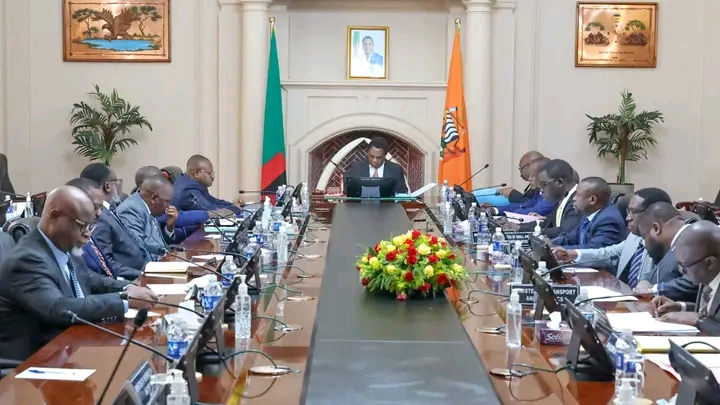
Togo’s President of the Council, Faure Gnassingbé, has reshuffled his cabinet, appointing two ministers in a move the government said was aimed at strengthening oversight of key transport and infrastructure sectors.
Under a decree Komlan Loukou-Kadjé was named minister of transport, opening up, and rural roads. The portfolio had previously been attached directly to the Presidency of the Council, according to an official statement.

Loukou-Kadjé, a civil engineer specialising in roads and bridges, returns to government after several years outside the cabinet. He previously served as minister of public works and transport following his appointment in February 2009, a role in which he oversaw major road and infrastructure projects.
The decree also brought Edem Kokou Tengue back into the government as minister delegate to the minister of transport, with responsibility for the maritime economy. Tengue, who holds a doctorate in economics, previously headed Maersk Togo and is widely regarded as a key figure in the country’s port and logistics sector.
He served as minister in charge of the maritime economy between 2020 and 2024, a period marked by efforts to modernise port operations and strengthen Togo’s position as a regional logistics hub. More recently, Tengue had been serving as minister-counsellor at the Presidency of the Council.

The creation of a standalone ministry dedicated to transport is intended to improve coordination and implementation of public investment in road infrastructure and domestic mobility, the government said. Authorities have repeatedly highlighted the need to expand and maintain road networks, particularly in rural areas, where access constraints continue to limit economic activity and the delivery of public services.
Togo has made transport infrastructure a central pillar of its development strategy in recent years, seeking to improve connectivity between production zones, border crossings and urban centres. Several road projects are currently under way or in preparation, supported by multilateral lenders and bilateral partners.
In the maritime sector, Tengue’s return is seen as a signal of continuity at a time when regional competition among West African ports is intensifying. The Port of Lomé, Togo’s main maritime gateway, plays a central role in the national economy and serves as a transhipment hub for landlocked countries in the region.

According to port authorities, the Port of Lomé handled about 2.06 million twenty-foot equivalent units (TEUs) in 2024, an increase of around 8% compared with the previous year. The port has consistently ranked among Africa’s top-performing ports in international logistics and efficiency benchmarks.
Officials have said further investments are planned to expand capacity, improve digitalisation and enhance competitiveness, as neighbouring countries also invest heavily in port infrastructure.
The latest cabinet changes bring the number of members of Togo’s executive branch to 29. The government now comprises 18 full ministers and 11 ministers delegate.
Gnassingbé, who has led Togo since 2005, has overseen several cabinet adjustments since the introduction of the current institutional framework, under which the President of the Council exercises executive authority. The government has said such adjustments are intended to improve efficiency and align ministerial responsibilities with evolving policy priorities.
The reshuffle comes as Togo seeks to sustain economic growth while managing fiscal pressures and rising investment needs. Authorities have pledged to accelerate reforms aimed at improving infrastructure, strengthening logistics and supporting private-sector development.
No further changes to the cabinet were announced.