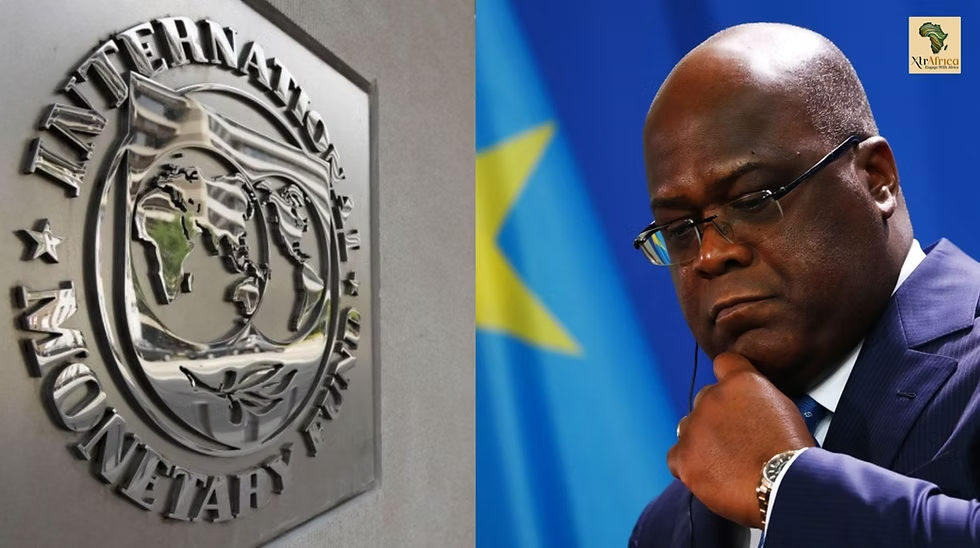
The International Monetary Fund (IMF) is set to send a mission to Mozambique in June to advance negotiations on a new financial assistance programme, as the country grapples with rising debt, slowing growth and constrained public finances.
An IMF spokesperson said discussions with Mozambican authorities had been “productive” during the recent Spring Meetings, particularly on the economic impact of global geopolitical tensions and the potential design of future support measures.
“Discussions will continue in the months ahead,” the spokesperson said, adding that the June visit would build on ongoing technical talks between both sides.
The planned mission comes at a time when Mozambique is under significant financial strain. The economy contracted by an estimated 0.5 percent in 2025, while public debt has climbed to about 91 percent of GDP, according to IMF estimates.
Investor confidence has also deteriorated sharply. Mozambique’s sovereign bond spreads have widened to distressed levels of around 1,185 basis points over U.S. Treasuries, signalling elevated risk perceptions in global markets.
More Read


The country’s fiscal pressures are compounded by a combination of structural and external shocks. A major hidden-debt scandal uncovered in 2016 severely damaged investor trust and restricted access to international capital markets, effects that continue to weigh on the economy today.
At the same time, delays in large-scale liquefied natural gas (LNG) projects — once expected to transform export earnings and fiscal revenues — have slowed anticipated economic recovery and reduced foreign exchange inflows.
Central bank data also show increasing reliance on domestic financing, with government borrowing from the central bank rising sharply in recent years, adding further pressure on monetary stability.
More Read

Mozambique’s previous IMF-supported programme ended prematurely in April 2025, and negotiations for a new arrangement have since focused on the scope and pace of economic reforms required to restore macroeconomic stability.
According to the IMF, any future programme would likely require a combination of fiscal consolidation, improved governance and structural reforms aimed at strengthening private sector-led growth.

“Swift fiscal consolidation, while protecting the vulnerable, and greater exchange rate flexibility, are needed to reduce financial pressures and bring stability,” the IMF spokesperson said.
The Fund also emphasised the need for deeper institutional reforms to improve public financial management and strengthen transparency in debt management, particularly in light of past governance challenges.
Economists say Mozambique’s outlook remains fragile, with recovery heavily dependent on restoring fiscal credibility, reviving delayed energy projects and improving investor confidence.
While LNG developments could eventually provide a significant boost to exports and government revenue, analysts caution that benefits will depend on security conditions, project execution and global energy market dynamics.
More Read


In the meantime, the government faces the challenge of balancing urgent social spending needs with debt sustainability constraints, as it seeks to stabilise an economy still recovering from years of shocks.
The upcoming IMF mission in June is expected to play a key role in determining whether Mozambique can secure a new programme that restores financial support and anchors medium-term reforms.