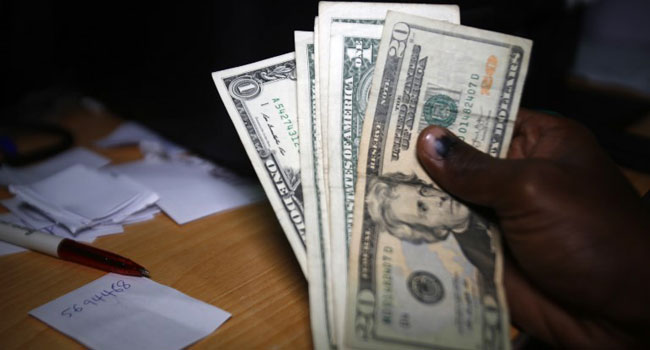
The U.S. dollar traded cautiously against major currencies on Wednesday as investors awaited the first monetary policy decision under new Federal Reserve Chair Kevin Warsh, with markets looking for clues on how the central bank’s approach to interest rates and communication may evolve under his leadership.
While the Federal Reserve is widely expected to leave interest rates unchanged at its policy meeting, investors are focusing on the accompanying statement, economic projections and Warsh’s first press conference for signals about the future direction of U.S. monetary policy.
The euro was little changed at US$1.1605, while the British pound edged lower to US$1.3420 against the dollar after softer-than-expected inflation data from the United Kingdom reduced expectations of further interest rate increases by the Bank of England.

Against the euro, sterling weakened slightly to 86.5 pence.
Currency markets remained subdued ahead of the Federal Reserve announcement, with traders reluctant to take large positions before hearing from the new chair.
More Read

“There have been many central banks meeting this month, but this is the one that’s overshadowing everything,” said Jane Foley, Head of Foreign Exchange Strategy at Rabobank.
“There is a lot of uncertainty over what Warsh might signal. No one is expecting a change in interest rates, but is he going to try and downplay the dot plot? Try and set up a new framework? Try to steer them towards an easing bias?” she said.
The Federal Reserve’s so-called “dot plot” is closely watched by investors because it provides policymakers’ projections for the future path of interest rates.
More Read


Warsh’s debut meeting has attracted particular attention because he was appointed by President Donald Trump, who frequently criticised former Fed Chair Jerome Powell over the pace of monetary easing.
Although markets do not expect an immediate rate move, investors are debating whether the new Fed leadership could alter the central bank’s policy outlook.
Interestingly, money markets are currently pricing in roughly an 80 percent probability that the Federal Reserve could raise interest rates before the end of the year, reflecting concerns about inflation risks.
Before the recent interim agreement between the United States and Iran to end their conflict, economists had expected the Fed to adopt a more hawkish tone because higher oil prices threatened to push inflation higher.
However, with crude oil prices falling back below US$80 per barrel following progress in the negotiations, policymakers may now face less pressure to tighten policy further.
Analysts say the Federal Reserve’s updated economic forecasts could provide insight into how officials view inflation, growth and labour market conditions in the aftermath of the geopolitical tensions.
More Read


Attention is also turning to other major central banks this week.
The Bank of England (BoE) is scheduled to announce its latest policy decision on Thursday, with markets similarly expecting no immediate change in interest rates.
However, policymakers’ comments will be closely scrutinised following data showing that UK inflation unexpectedly remained at 2.8 percent in May, unchanged from April’s 13-month low.
The figures have strengthened expectations that the BoE may avoid raising rates this year if inflation continues to moderate.
“We need to keep watching the data, but if economists think the peak in UK inflation could be lower than they had thought, the BoE could get away without hiking rates this year,” Foley said.
Markets currently expect one Bank of England rate increase before year-end.
In Asia, the Japanese yen traded at 160.25 per dollar, slightly stronger on the day but still near levels that have previously triggered concerns about possible government intervention.
The Bank of Japan (BOJ) raised interest rates on Tuesday to their highest level in 31 years as part of its ongoing effort to normalise monetary policy and address inflation pressures linked to higher energy costs.
While the BOJ signalled readiness to tighten policy further, officials offered little guidance on the timing of future rate increases.
Meanwhile, Sweden’s currency weakened after the Riksbank left interest rates unchanged, citing increased inflation risks stemming from Middle East tensions but also noting subdued economic activity.
The euro rose to 10.88 Swedish crowns, while the dollar gained to 9.383 crowns.
With major central banks navigating a complex mix of inflation risks, geopolitical developments and economic uncertainty, investors are expected to remain focused on policy signals from Washington, London and Tokyo as they assess the outlook for global markets and currencies in the second half of the year.